Sidi Bouzid Revolution Museum
Typology:
Museum
Status:
Concept design
Localisation:
Sidi bouzid
Area:
6 000 m²
Year:
2015
Budget:
20 MD
Project description
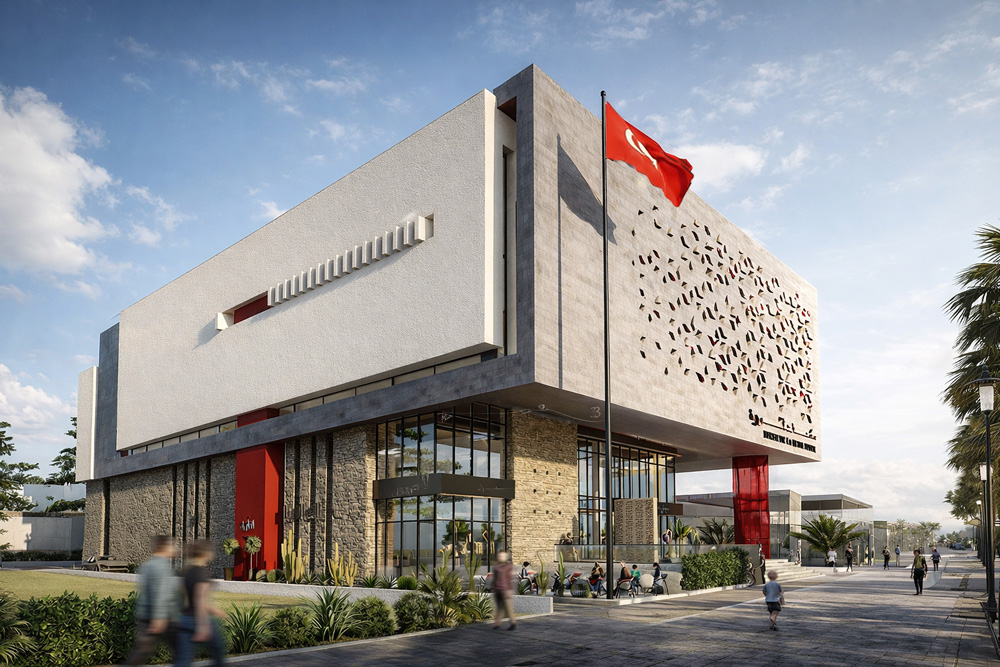
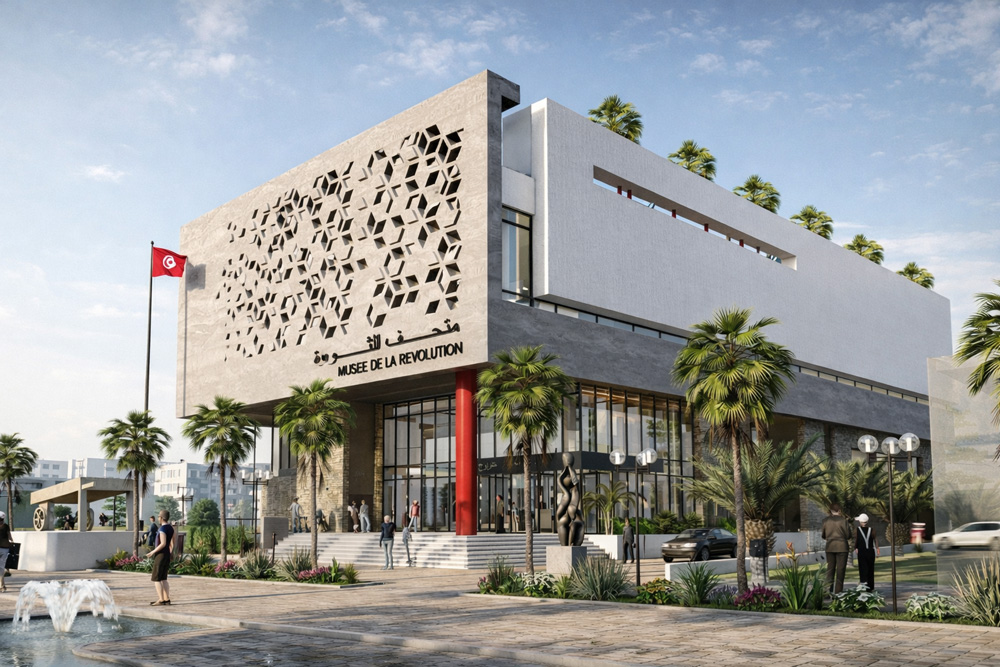
The Tunisian Revolution—known as the Jasmine Revolution—was the spark that ignited a wave of uprisings across the Arab world. Born in Sidi Bouzid in 2010, this movement carried the voice of a people who longed for dignity, justice, and freedom after 23 years of authoritarian rule. To honor those who suffered and those who fought, and to preserve the memory of this turning point in national history, the Tunisian government launched a national architectural competition to create the Revolution Museum. Our architectural approach draws its essence from the Tunisian flag and from the spirit of the people during those defining days. The red, symbolizing sacrifice and the blood of the martyrs, is expressed boldly in the façade and vertical elements, while the white—representing jasmine, purity, and the promise of peace—forms the calm, luminous envelope of the building.
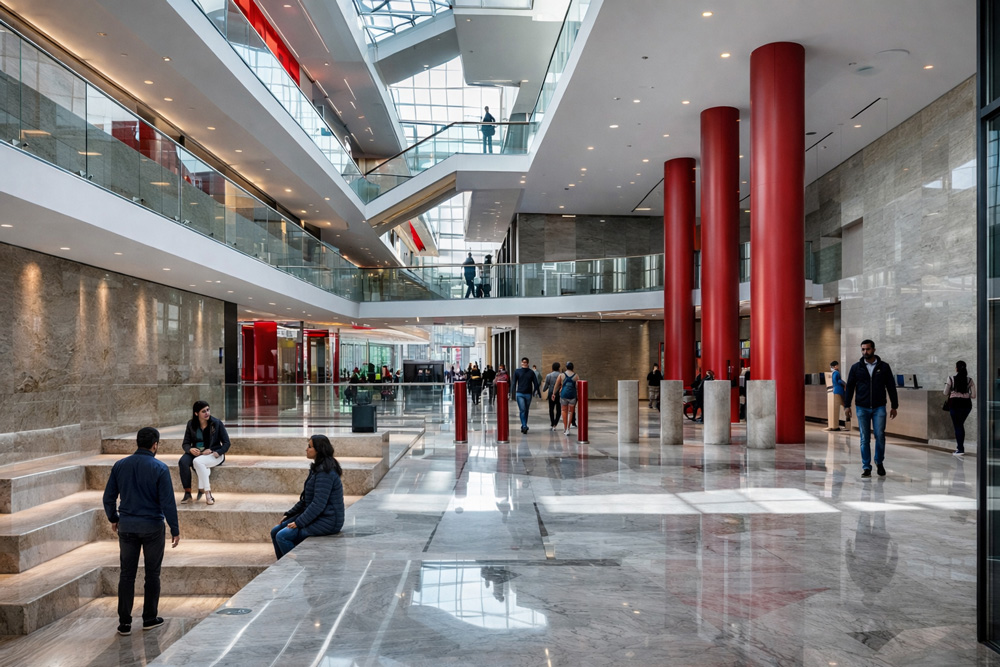
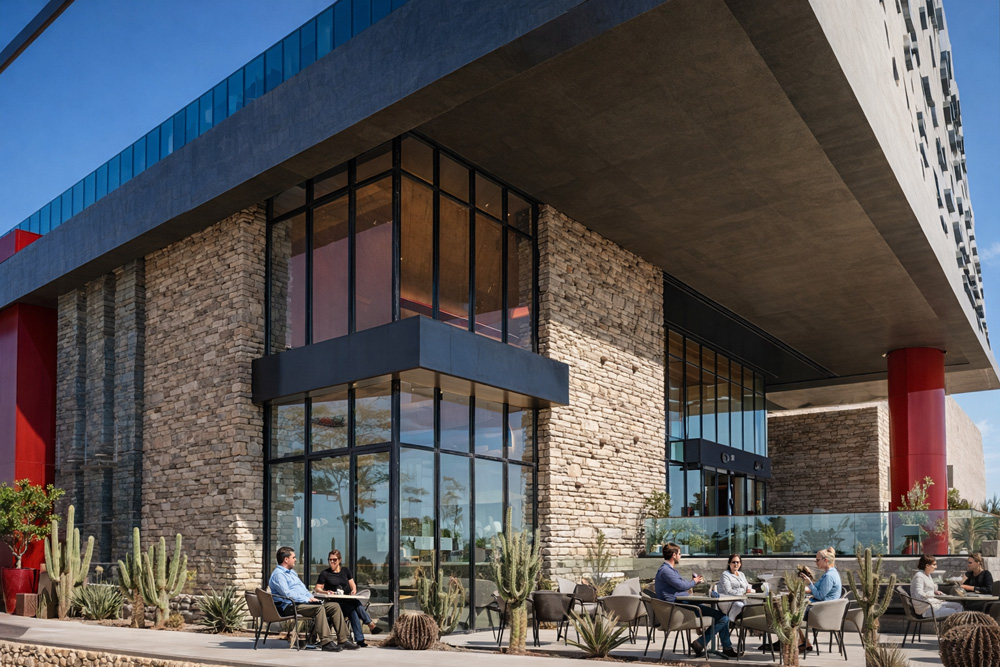
From the exterior, the museum stands as a contemporary monument: a composition of clean volumes, geometric perforations, and strong contrasts. The interplay of red columns beneath the cantilevered mass evokes both resilience and uprising. Large glass surfaces open the building to the public realm, embodying transparency and the rebirth of civic life. The surrounding landscape—palm trees, open plazas, and the national flag rising proudly—anchors the project in Tunisian identity and collective memory.
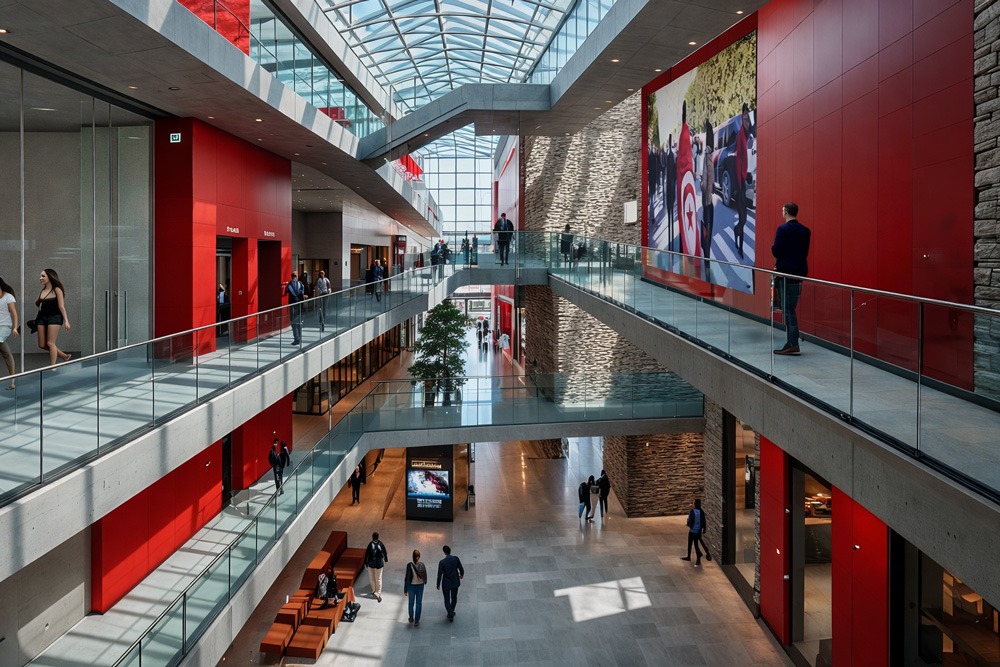
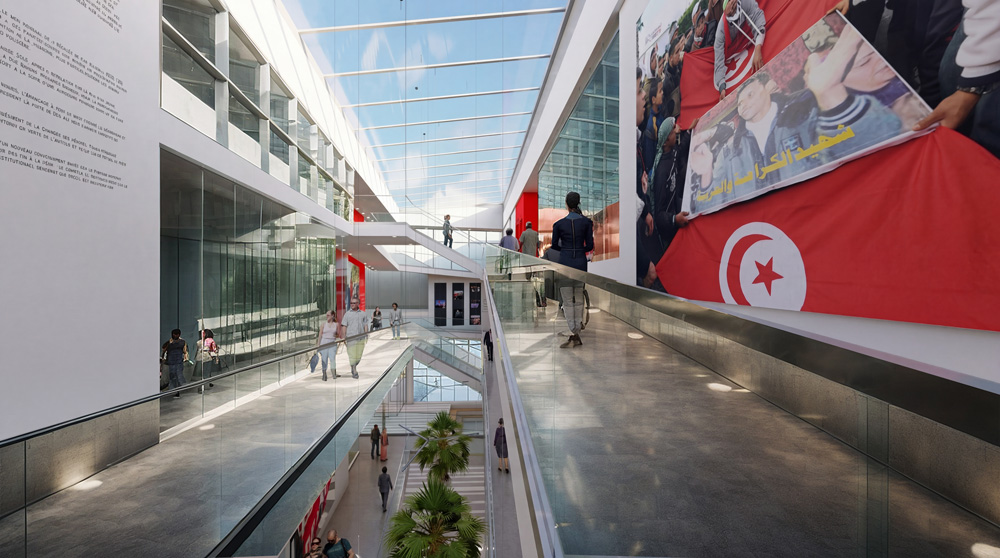
Inside, the museum becomes a chronological journey through oppression, resistance, and liberation. As visitors ascend through the ramps and bridges of the atrium, they encounter documented evidence of the abuses of the former regime: censorship, torture, political exclusion, and state violence. The architecture gradually allows more daylight to penetrate the interior, symbolizing the people’s awakening and the slow breaking of the chains of fear. At the heart of this ascent resonates the spirit of Abou El Kacem Chebbi’s immortal verses:
“إذا الشعبُ يومًا أراد الحياة
فلا بُدّ أنْ يستجيب القدر
ولا بُدّ لليل أن ينجلي
ولا بُدّ للقيدِ أن ينكسر”
The journey culminates in an open rooftop space, bathed in sky and natural light—a place for reflection, contemplation, and hope. It is here that visitors are invited to look toward the future, to imagine the continuing story of a country still shaping its democracy. The museum is not only a vessel of memory; it is a symbol of renewal, resilience, and the unbroken will of the Tunisian people.
Photo gallery